Outreach and Teaching
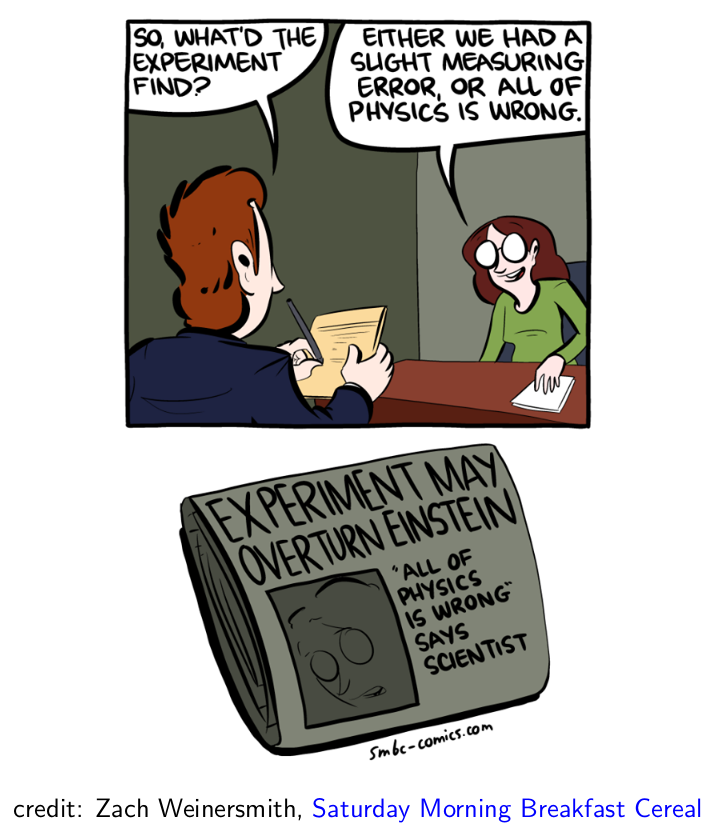
Here are some examples of outreach and teaching activities I've initiated and participated in over the past few years. I've greatly enjoyed the opportunities to help spread my flavor of physics to a variety of audiences, and hope to make physics more fun for everyone. It's also a way for me to "pay it forward," and give back to the community in ways similar to how I became inspired to learn physics in the first place. You can find more activities and details in my CV.
Splash at Berkeley
As a grad student, I'm currently an admin and organizer for Splash at Berkeley, a semesterly program which brings around >300 high school students to Berkeley for one glorious day to learn about ~100 different topics taught by undergraduates and graduate students. I'm also a teacher for Splash. Over the years I've taught several courses for Splash broadly related to physics, mathematics, and astrophysics. These include courses about dark matter, relativity, group theory and algebra, complex analysis, and others.
You can find a list and description of courses I've taught for Splash here.
Public Talks
UC Berkeley Astro Night
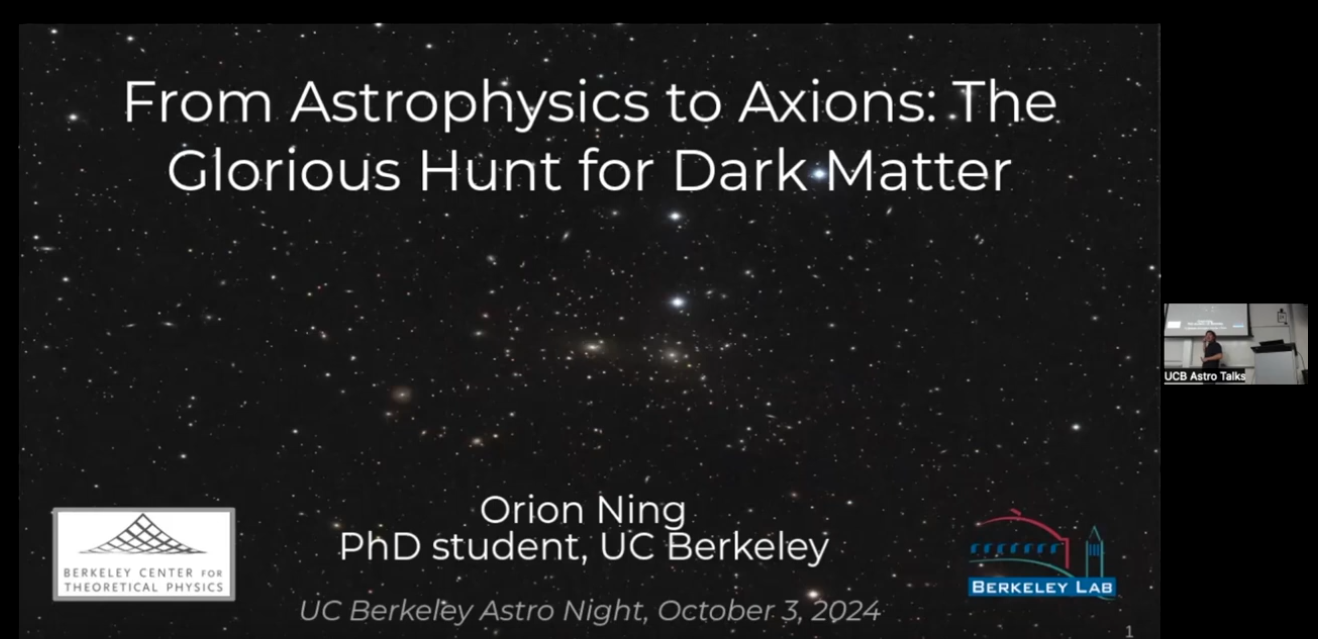
The Astronomy Department at UC Berkeley offers an amazing monthly program called Astro Night, which facilitates a public lecture followed by stargazing using Berkeley's telescopes atop Campbell Hall. I gave one of these public lectures on Oct. 3, 2024, about dark matter and my work straddling the interface of astrophysics and particle physics.
Here is the recording: From Astrophysics to Axions: The Glorious Hunt for Dark Matter.
Compass Lectures at UCB
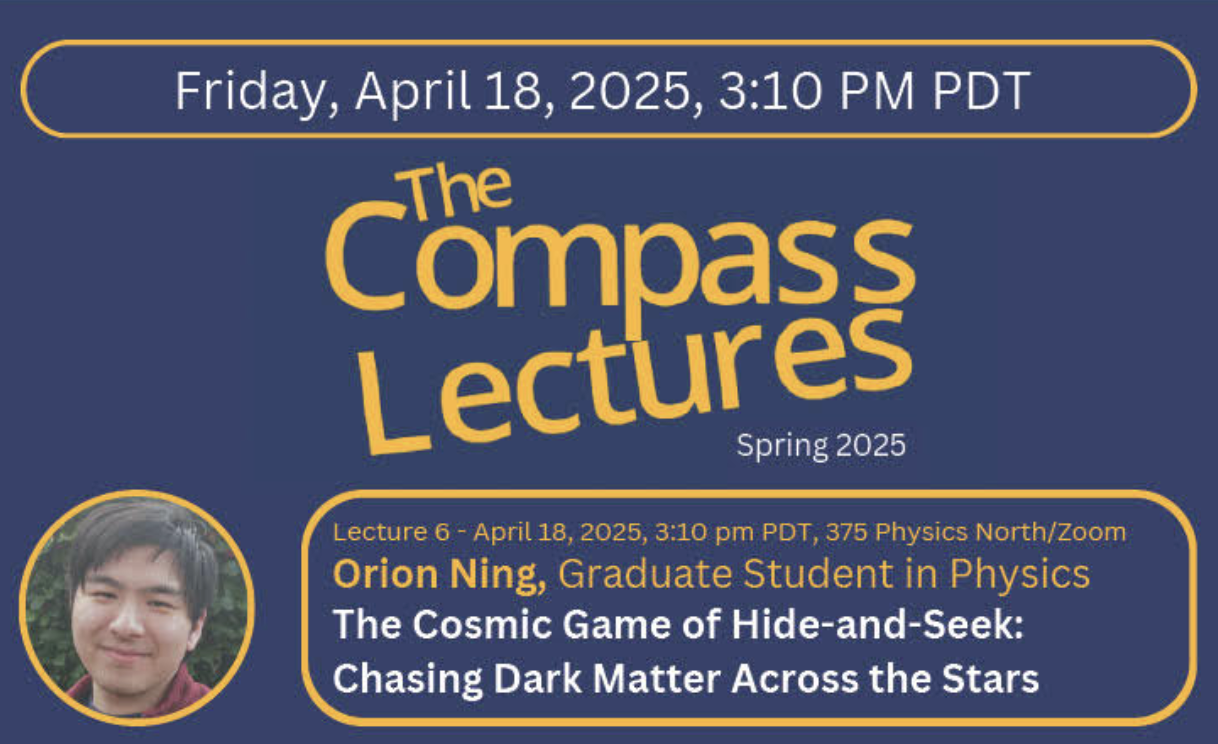
The Compass Lecture Series, provides Berkeley researchers opportunities to share their work with a primarily undergraduate audience as a means of introducing and exposing undergraduates to physics research in general and what people are excited about at Berkeley. I gave one of these lectures on April 18, 2025, mostly about my work in particle dark matter and various astrophysical probes of it.
Here is the recording: The Cosmic Game of Hide-and-Seek: Chasing Dark Matter Across the Stars.
Astronomy on Tap SF
I gave an Astronomy on Tap SF public lecture on December 9, 2025, about dark matter, astrophysics, and particle physics to a very crowded room of San Franciscans in various states of inebriation asking (often very good!) questions about physics and astrophysics. Astronomy on Tap's SF chapter holds similar events every month: Astronomy on Tap SF.
Teaching Assistant (GSI) at UC Berkeley
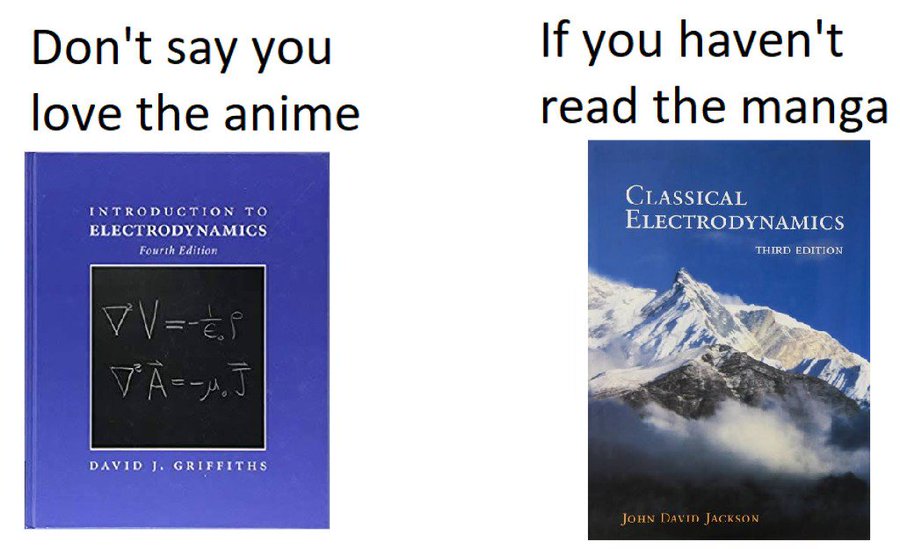
In Fall 2021, I was a TA for Physics 110B, which is an elective course covering advanced topics in upper-division electromagnetism. This includes further applications of waves and optics, and then coverage of electrodynamics, including Green's functions, radiation, and multipole expansions.
You can follow along my discussion/recitation notes and problems here (link).
Beginner's Guide to the Universe
When I was an undergraduate, I was especially proud of leading and designing a for-credit student-run course at Berkeley (DeCal) called "Beginner's Guide to the Universe". This course aimed to introduce the modern landscape of physics and astronomy to a general student audience in a way that emphasizes the ability to critically analyze contemporary physics headlines with both excitement and skepticism. The course was registered under the number Astronomy 98, for 2 units.
This course's first incarnation was founded in 2019 by the amazing binary Dholakia Brothers (Shishir and Shashank) and the inimitable Nicholas Rui. It was continued and expanded upon by Yonna Kim and myself in 2020. I became lead facilitator in the 2021-2022 academic year. Roles included course design, problem sets, grading, leading thoughtful discussions, and, of course, giving lectures about topics ranging from classical and quantum physics, to astrophysics and cosmology, to particle physics and quantum information. Particular emphasis was placed on non-physics students being able to decipher modern developments in physics and astronomy, for example the development of JWST, or the Muon g-2 experiment at Fermilab, or Google's quantum computing-related press releases.
You can find an example syllabus during my tenure as lead faciliator here (link). The typical number of enrolled students was about ~60.